


Medically reviewed by Dr. Amit Chopra, MD, Psychiatrist and Sleep Medicine Specialist · Last updated: October 2026
Your doctor has ordered an at home sleep study, and the device is on its way to your bedside. Now what? The good news is that a home sleep test is simple, painless, and done in your own bed. But a little preparation goes a long way. The more normal your night is, the more accurate your results will be.
This guide walks you through everything: what’s in the sleep study kit, how to prepare the day before, how to put the device on, what to do if something goes wrong during the night, and what happens next. If you’re in Boston or elsewhere in Massachusetts, you can schedule a home sleep study in Boston with sleep medicine specialist Dr. Amit Chopra, MD, at Zen Minds Psychiatry.
What Does an At Home Sleep Study Look Like?
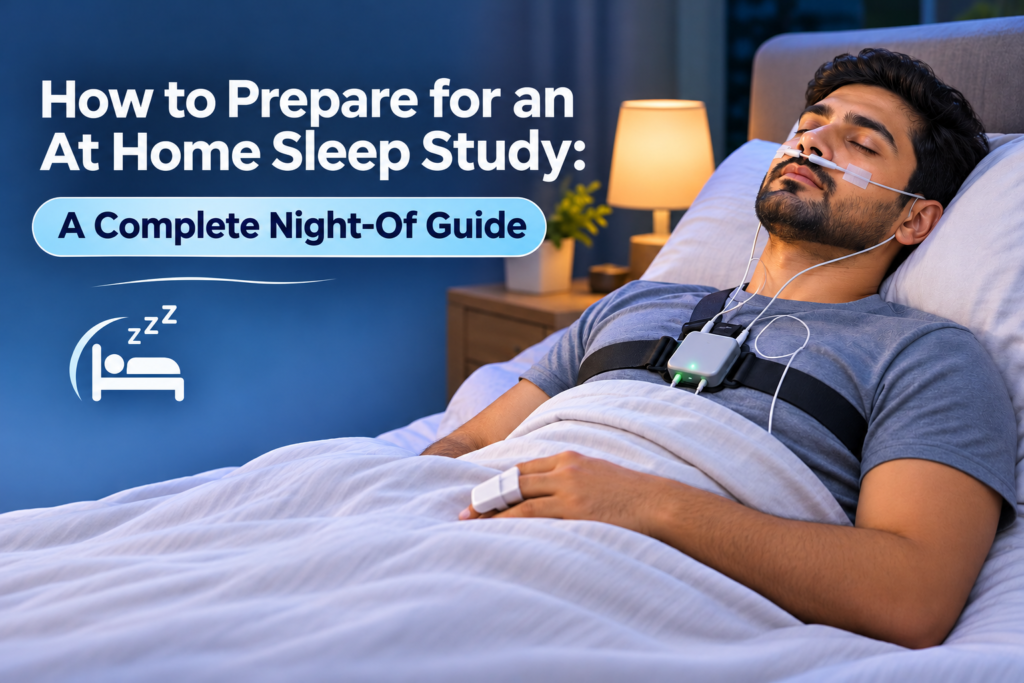
Many people picture a tangle of wires, but a modern at home sleep study machine is small and lightweight. Devices vary, but most sleep study kits at home include:
Part | What It Does |
Recorder | A small unit, often worn on your chest or wrist, that stores the data |
Chest belt | Tracks your breathing effort as your chest rises and falls |
Nasal cannula | A thin, soft tube under your nose that measures airflow |
Finger sensor (oximeter) | Clips onto a fingertip to measure blood oxygen and heart rate |
Instructions | Step-by-step directions for putting the device on and turning it on |
Some newer devices are even simpler, using just a wrist unit and a finger sensor. Your kit will come with instructions for your specific device.
How to Prepare for a Home Sleep Study: The Day Before
The goal is a typical night of sleep. Follow these steps on the day of your test:
- Keep your normal schedule. Wake up and go to bed at your usual times.
- Skip naps. Napping can make it harder to fall asleep that night.
- Limit caffeine after noon. Coffee, tea, energy drinks, and soda can keep you awake.
- Avoid alcohol. It can change your breathing and sleep patterns, unless your doctor says otherwise.
- Take your regular medications. Don’t stop or change any medication unless your doctor tells you to.
- Remove nail polish or acrylic nails from at least one finger, so the oxygen sensor reads correctly.
- Shower before bed and skip heavy lotions or oils on your chest and face, so sensors and tape stay in place.
- Read the instructions early. Practice putting the device on in the evening, not when you’re already tired.
- Charge the device if your kit requires it.
If your doctor gave you special instructions, always follow those first.
How to Use an At Home Sleep Study Device: Night of the Test
Put the device on about 30 minutes before you plan to sleep, so you can settle in. While every kit is a little different, the steps usually look like this:
- Wear comfortable sleepwear. A loose, fitted T-shirt works well with the chest belt.
- Attach the chest belt snugly around your chest, just below the armpits. It should be firm but not tight.
- Connect the recorder to the belt or your wrist, as shown in your instructions.
- Place the nasal cannula. Put the prongs gently in your nostrils, loop the tubing over your ears, and slide the fitting under your chin. Use medical tape on your cheeks if your kit includes it.
- Clip on the finger sensor, usually on the index or middle finger of your non-dominant hand.
- Turn the device on. Many devices show a light or confirmation once they start recording.
- Go to sleep as usual. Sleep in your normal position. Try not to change your routine because of the test.
It may feel a little strange at first, but most people fall asleep without much trouble. The device only records data; it doesn’t send anything into your body.
What If Something Goes Wrong During the Night?
Don’t worry if your night isn’t perfect. Here’s how to handle common situations:
Situation | What to Do |
A sensor falls off | Put it back on and go back to sleep. Short gaps in data are common. |
You need the bathroom | Most devices can stay on. If you must remove a sensor, put it back on when you return to bed. |
You can’t fall asleep | Stay relaxed and keep the device on. Even a few hours of recording are often enough. |
The device light turns off or shows an error | Check the instructions to restart it, and note the time it happened. |
You’re sick or congested | Call your doctor’s office before the test. A cold can affect your breathing, so you may need to reschedule. |
In the morning, jot down roughly what time you fell asleep, when you woke up, and any problems during the night. This helps your doctor read your results accurately.
The Morning After Your Home Sleep Study
When you wake up, turn off the device and gently remove the sensors. Pack everything back into the kit and return it as instructed. Some devices record for more than one night, so check whether you need to repeat the test.
Your sleep doctor then reviews the recording. The key number is the Apnea-Hypopnea Index (AHI), which shows how many times per hour your breathing stopped or became shallow. At your follow-up visit, your doctor will explain your results and your options.
If you’re diagnosed with sleep apnea, treatment may include CPAP therapy, an oral appliance, positional therapy, or lifestyle changes. Learn more about obstructive sleep apnea treatment. If your results are normal but your symptoms continue, your doctor may recommend an in-lab sleep study for a closer look.
Get Your At Home Sleep Study in Boston
A home sleep study is one of the simplest ways to find out what’s behind your snoring, restless nights, or daytime exhaustion. At Zen Minds Psychiatry, Dr. Amit Chopra, MD, a sleep medicine specialist, guides you from your first consultation to your results and treatment plan. Patients in Boston and across Massachusetts get expert care without spending a night in a sleep lab.
Ready to get answers about your sleep? Book your home sleep study in Boston today.
Can I do a sleep study with a cold?
It’s best to call your doctor first. A cold or stuffy nose can change your breathing and affect the airflow sensor, so your doctor may suggest rescheduling until you feel better.
Can I sleep on my side during a home sleep study?
Yes. Sleep in whatever position is normal for you. Many devices track your body position, which helps your doctor see if your breathing changes on your back versus your side.
Do I need to sleep the whole night for the test to work?
No. You don’t need perfect sleep. Several hours of recorded sleep are usually enough for your doctor to read the results.
Can I take my sleep medication the night of the test?
Take your usual medications unless your doctor tells you otherwise. Let your doctor know about any sleep aids you use, since they can affect the results.
What if I already use CPAP?
Ask your doctor whether to use it during the test. Diagnostic home sleep studies are usually done without CPAP, unless your doctor wants to check how well your treatment is working.
Is a home sleep study uncomfortable?
Most people find it easy. The sensors are light, and there are no needles. It may take a few minutes to get used to the nasal cannula, but most people sleep through the night.