


Yes. We’re currently accepting new in-person clients on Mondays, evenings 5–8pm, at our Wellesley Hills office.

Sleep Medicine · Psychiatric Care
Circadian Rhythm Sleep-Wake Disorders
If your internal clock and the outside world are constantly out of sync — you can’t fall asleep until 3am, you’re wide awake at 4am, or shift work has your sleep in permanent disarray — it may be a circadian rhythm sleep disorder. Dr. Amit Chopra, MD — a dual board-certified psychiatrist and sleep medicine specialist — offers evaluation and treatment for delayed sleep phase, shift work disorder, jet lag, and other sleep-wake cycle disorders.
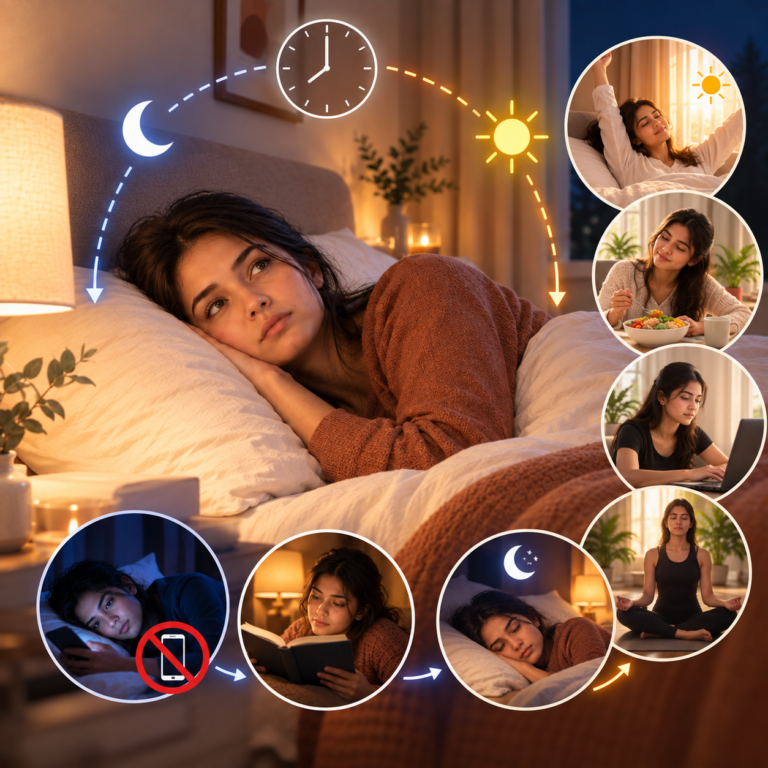
All subtypes treated — Delayed/advanced sleep phase, shift work, jet lag, non-24
Light & melatonin timing — Precisely timed, not guesswork
Evening hours — In-person at our Wellesley Hills office
Definition & Meaning
What is a circadian rhythm sleep-wake disorder?
Your circadian rhythm is your body’s roughly 24-hour internal clock — it tells you when to feel sleepy and when to feel alert, and it governs far more than sleep alone (body temperature, hormone release, and appetite all follow it too). People searching “what is circadian rhythm” or “define circadian rhythm” are usually trying to understand why their sleep schedule feels stuck at the wrong time, despite their best efforts.
A circadian rhythm sleep disorder happens when this internal clock is out of sync with the actual day-night cycle, or with the schedule your life demands. This isn’t the same as ordinary insomnia — someone with a circadian rhythm disorder can often sleep perfectly well, just at the “wrong” time. Disorders of the sleep-wake cycle include several recognized subtypes:
Delayed Sleep-Wake Phase
Often abbreviated DSWPD — a persistent tendency to fall asleep and wake up much later than desired — the “night owl” pattern taken to a disruptive extreme
Advanced Sleep-Wake Phase
Falling asleep and waking up much earlier than desired, more common with age
Shift Work Disorder
Sleep-wake disruption caused by working nights, rotating shifts, or irregular schedules
In-person & flexible scheduling
Temporary disruption from travel across time zones, or a chronically irregular sleep-wake pattern with no consistent schedule at all
Why choose Zen Minds for circadian rhythm disorders
Dual expertise
Dr. Chopra is a psychiatrist and sleep medicine specialist at Massachusetts General Hospital and Assistant Professor of Psychiatry at Harvard Medical School — equipped to treat both the circadian disruption and any anxiety or mood impact from years of fighting your own sleep schedule.
We diagnose, not guess
We identify which specific circadian rhythm sleep disorder you have — delayed phase, shift work, irregular rhythm, or otherwise — since each one is treated differently.
Precisely timed treatment
Light exposure and melatonin timing only work when timed correctly for your specific rhythm — we calculate this rather than offering generic “take melatonin at bedtime” advice.
In-person & flexible scheduling
In-person sessions at our Wellesley Hills office, with evening appointments available for patients balancing work or school.
Signs & Symptoms
Circadian rhythm disorder symptoms
Circadian sleep disorder symptoms look different depending on the subtype, but the common thread is a mismatch between when you’re sleepy and when you need to be awake:
- Chronic difficulty falling asleep or waking at socially/occupationally required times
- Sleeping fine once you finally do fall asleep — but at the "wrong" hours
- An irregular sleep-wake pattern — no consistent sleep period at all, night to night
- Feeling wide awake at your desired bedtime, or exhausted at your desired wake time
- Excessive daytime sleepiness on a conventional schedule (school, work, appointments)
- Sleep problems that reliably worsen with shift work or travel across time zones
If you’ve ever asked “why are my legs so restless when I sleep” or found yourself unable to sleep because your legs simply won’t stay still, that pattern — worse at rest, worse at night, relieved by movement — is the clearest clue that this is RLS and not just ordinary restlessness.
Self-Care & Daily Strategies
What actually helps at home
Some circadian strategies can be started on your own, though timing matters more here than with almost any other sleep disorder:
Light Exposure Habits
- Bright light (ideally sunlight) soon after your desired wake time
- Dimming lights and screens in the hours before your desired bedtime
- Blackout curtains or an eye mask if sleeping during daylight (shift workers)
- Gradually shifting your schedule in small increments rather than all at once
What to Cut Back On
- A fixed wake time every day, even on weekends and days off
- Avoiding long, late naps that push your rhythm further out of sync
- Limiting caffeine in the second half of the day
- Planning ahead for travel across time zones rather than adjusting after the fact
Self-timed light and melatonin often help mild cases, but incorrect timing can just as easily push your rhythm the wrong direction — which is exactly where a proper evaluation and personalized plan makes the difference.
What Causes Circadian Rhythm Disorders
What causes circadian rhythm sleep-wake disorders?
Circadian rhythm disruption comes from a mismatch between your internal clock and your environment or schedule:
Genetics
Some people are biologically predisposed to a delayed or advanced internal clock, independent of habits
Shift work
Night shifts, rotating shifts, and irregular schedules force the body clock against its natural rhythm
Travel across time zones
Jet lag results when your internal clock hasn’t yet adjusted to a new local time
Light exposure patterns
Too much light at night and too little in the morning are two of the most common drivers of misaligned circadian rhythm
Age
Circadian timing naturally shifts later in adolescence and earlier in older adulthood
Blindness
Total blindness can prevent the light signal that keeps the clock synced, leading to non-24-hour sleep-wake disorder
Irregular routines
Inconsistent sleep and wake times, even without shift work, can produce an irregular sleep-wake rhythm disorder over time
Underlying conditions
Certain neurological or psychiatric conditions can disrupt the body’s normal circadian signaling
How These Disorders Are Diagnosed
How we diagnose circadian rhythm disorders
Diagnosis is based on establishing your actual sleep-wake pattern over time, not just a single conversation:
Sleep diary
Tracking your natural sleep and wake times over one to two weeks, without an alarm when possible
Actigraphy
A wrist-worn device that objectively records your rest-activity pattern over one to two weeks
Symptom & history review
Understanding your work schedule, travel patterns, and how long the disruption has lasted
Ruling out other causes
Screening for insomnia, sleep apnea, or a mood disorder that could be mimicking or worsening the pattern
Because the treatment for delayed sleep phase is essentially the opposite of the treatment for advanced sleep phase, getting the specific diagnosis right is what makes light and melatonin timing actually work.
Treatment Options
Circadian rhythm sleep disorder treatment
Treatment is built around resetting your internal clock, not just treating symptoms of tiredness:
Light & Melatonin Timing
- Bright light therapy, timed precisely to shift your rhythm earlier or later
- Low-dose melatonin, timed hours before your desired bedtime — not simply "at night"
- Strategic light avoidance (blue-light blocking) at specific times of day
- Gradual schedule shifting (chronotherapy) for select patients
Behavioral & Medical Support
- Structured sleep scheduling built around your work or school demands
- Wake-promoting medication for shift workers who must stay alert overnight
- Treatment for any co-occurring insomnia, anxiety, or depression
- Follow-up adjustments as your schedule or symptoms change
Most patients see meaningful improvement within a few weeks of starting a properly timed light and melatonin plan — consistency matters as much as the plan itself.
Are You a College Student?
The Zen Minds Student Psychiatry & Sleep Program
Anxiety, ADHD, depression, and sleep struggles often surface during college — and campus counseling centers are booking one to two weeks out. Get seen in 5–7 business days, with care built specifically for college and graduate students.
We welcome referrals for medication management, ADHD evaluation, or sleep concerns outside your team’s scope — and with the student’s consent, we’ll stay in touch so nothing falls through the cracks.
Meet the founder
Dr. Amit Chopra, MD
Most Boston psychiatrists treat the mind. Dr. Amit Chopra treats the mind and the sleep behind it. A dual board-certified psychiatrist and sleep medicine specialist, Assistant Professor of Psychiatry at Harvard Medical School, and practicing psychiatrist at Massachusetts General Hospital, Dr. Chopra trained at the Mayo Clinic and has presented specifically on ADHD and sleep disorders in young adults to the American Society for Adolescent Psychiatry.
He founded Zen Minds Psychiatry — and built the Student Psychiatry & Sleep Program specifically — because the students who need psychiatric care most are often the ones with the least time to wait for it.

Hear From Our Clients
From patients who found their sleep again
“Following a sleep study, Dr. Chopra was able to diagnose and begin to treat a sleep disorder I’d struggled with since childhood. He’s been thoughtful about trialing different treatments and finding a combination that improves my daytime cognition — all while considering the impact on my other health conditions.”
— LT, patient for three years
“I’ve been seeing Dr. Chopra for 3 years now, and he has been really helpful. He is kind, listens, is thoughtful, and always responds quickly to my messages. Being a sleep specialist has been really beneficial in helping me treat my sleep disorders.”
— JH, patient for two years
Frequently Asked Questions (FAQ)
What is a circadian rhythm sleep-wake disorder?
It’s a condition where your internal 24-hour body clock is out of sync with the actual day-night cycle or your required schedule, causing sleep to happen at a mistimed, disruptive hour.
What are the main types of circadian rhythm disorders?
Delayed sleep-wake phase, advanced sleep-wake phase, shift work disorder, jet lag disorder, irregular sleep-wake rhythm disorder, and non-24-hour sleep-wake disorder are the main recognized types.
What are the symptoms of a circadian rhythm disorder?
Chronic difficulty sleeping or waking at required times, feeling alert or exhausted at the “wrong” hours, and otherwise normal sleep quality once it finally occurs, are the classic signs.
What causes circadian rhythm sleep disorders?
Genetics, shift work, travel across time zones, irregular light exposure, age-related shifts, and — in cases of total blindness — the loss of the light signal that keeps the clock synced.
How is a circadian rhythm disorder diagnosed?
Through a sleep diary and/or actigraphy tracking your natural sleep-wake pattern over one to two weeks, combined with a history that rules out other sleep or mood conditions.
How is delayed sleep phase syndrome treated?
With correctly timed bright light exposure in the morning, low-dose melatonin timed in the evening well before desired bedtime, and gradual schedule shifting.
Does melatonin help with circadian rhythm disorders?
Yes, but timing is everything — melatonin taken at the wrong time can worsen rather than correct the problem, which is why we calculate your specific timing rather than giving generic advice.
Is jet lag a real circadian rhythm disorder?
Yes — jet lag disorder is a recognized, usually temporary circadian rhythm disruption caused by rapid travel across time zones faster than your internal clock can adjust.
Do you offer in-person appointments for circadian rhythm evaluation?
Is jet lag a real circadian rhythm disorder?
Yes — jet lag disorder is a recognized, usually temporary circadian rhythm disruption caused by rapid travel across time zones faster than your internal clock can adjust.
Are teenagers more prone to delayed sleep phase?
Yes — adolescence naturally shifts the circadian clock later, which combined with early school start times makes delayed sleep-wake phase especially common in teens and college students.