


Yes. We’re currently accepting new in-person clients on Mondays, evenings 5–8pm, at our Wellesley Hills office.

Sleep Medicine · Psychiatric Care
Narcolepsy Treatment
Falling asleep at your desk, at the wheel, or mid-conversation isn’t laziness — it can be narcolepsy, a chronic neurological sleep disorder that affects how the brain regulates sleep and wakefulness. Dr. Amit Chopra, MD — a dual board-certified psychiatrist and sleep medicine specialist — offers narcolepsy diagnosis, sleep study referral, and a full range of treatment options for excessive daytime sleepiness and cataplexy.
Sleep study referral — Overnight PSG and MSLT testing for narcolepsy diagnosis
Type 1 & Type 2 — Treatment for narcolepsy with or without cataplexy
Evening hours — In-person at our Wellesley Hills office
Narcolepsy Definition & Meaning
What is narcolepsy?
Narcolepsy is a chronic, lifelong neurological disorder that affects the brain’s ability to regulate normal sleep-wake cycles. People often search “what is narcolepsy,” “narcolepsy meaning,” or “define narcolepsy” expecting something rare and dramatic — in reality, it’s a real, diagnosable, and treatable disease, not a personality trait or an excuse for poor sleep habits.
At its core, narcolepsy causes the brain to intrude wakeful moments with fragments of REM sleep at the wrong times — leading to overwhelming daytime sleepiness, and in some people, sudden muscle weakness known as cataplexy. This is the “narcolepsy and cataplexy” connection so many patients ask about.
There are two recognized types: Type 1 narcolepsy (formerly “narcolepsy with cataplexy”), linked to low levels of a brain chemical called hypocretin/orexin, and Type 2 narcolepsy (“narcolepsy without cataplexy”), where excessive sleepiness occurs without the muscle-weakness episodes. Both types of narcolepsy fall under the broader disease narcolepsy category, and both are manageable with the right treatment plan.
Why choose Zen Minds for narcolepsy treatment
Dual expertise
Dr. Chopra is a psychiatrist and sleep medicine specialist at Massachusetts General Hospital and Assistant Professor of Psychiatry at Harvard Medical School — equipped to treat both narcolepsy itself and the anxiety, low mood, or social impact it often carries.
We look at the whole picture
Excessive daytime sleepiness has many causes. We take narcolepsy symptoms seriously and pursue a real diagnostic workup — including sleep study referral — rather than assuming “you’re just tired.”
Full range of options
Stimulant and non-stimulant wake-promoting medications, cataplexy-specific treatments, and behavioral strategies — matched to whether you have Type 1 or Type 2 narcolepsy.
In-person & flexible scheduling
In-person sessions at our Wellesley Hills office, with evening appointments available for patients balancing work or school.
IS THIS THE RIGHT FIT?
Symptoms of narcolepsy
What are the five symptoms of narcolepsy? Clinicians often group narcolepsy symptoms in adults into five recognizable areas:
- Excessive daytime sleepiness — an overwhelming urge to sleep, even after a full night's rest
- Sleep paralysis — a temporary inability to move or speak while falling asleep or waking up
- Disrupted nighttime sleep — frequent waking, despite daytime exhaustion
- Cataplexy — sudden, brief muscle weakness triggered by strong emotion like laughter or surprise
- Hallucinations — vivid, dream-like experiences while falling asleep or waking (hypnagogic/hypnopompic)
- Sudden "sleep attacks" — falling asleep abruptly, sometimes mid-task or mid-conversation
Not everyone experiences all five — narcolepsy without cataplexy symptoms is common, and many people live with undiagnosed narcolepsy for years because “just being tired all the time” doesn’t sound serious enough to bring up.
Insomnia Remedies & Self-Care
What actually helps at home
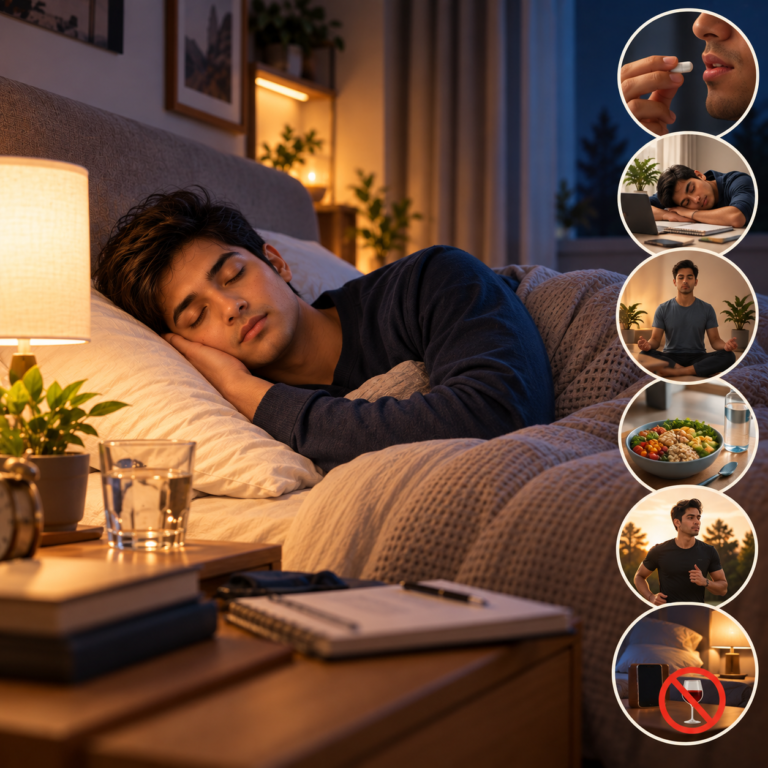
Alongside medication, day-to-day habits make a real difference in how manageable narcolepsy feels:
Daily Habits That Help
- Scheduled short naps (15–20 minutes) at consistent times during the day
- A strict, consistent sleep and wake schedule, even on weekends
- Regular exercise, which can improve alertness and mood
- Avoiding alcohol and heavy meals that worsen sleepiness
Practical Safety Steps
- Talking with your employer or school about accommodations, if needed
- Planning around driving — never driving while drowsy or between naps
- Connecting with a narcolepsy support group — community matters
- Tracking your own sleep attack and cataplexy patterns to share with us
These strategies help you function day to day, but they don’t replace treatment — narcolepsy is a lifelong neurological condition, and consistent medical care is what actually changes its course.
What causes narcolepsy?
Narcoleptic causes are still being researched, but the clearest picture we have is this:
Loss of hypocretin neurons
In Type 1 narcolepsy, the brain loses the neurons that produce hypocretin (orexin), a chemical that keeps you awake and regulates REM sleep
Autoimmune process
Growing evidence suggests the immune system may mistakenly attack these hypocretin-producing brain cells
Genetics
A specific gene variant (HLA-DQB1*06:02) is present in most people with Type 1 narcolepsy, though having it alone doesn’t cause the disease
Triggers
Certain infections or, rarely, brain injury have been linked to onset in genetically susceptible people
Type 2 narcolepsy’s cause is less well understood — hypocretin levels are often normal, which is part of why it can be trickier to diagnose than Type 1.
Types of Narcolepsy
Type 1 vs. Type 2 narcolepsy
Type 1
Narcolepsy with cataplexy
Excessive daytime sleepiness plus cataplexy, typically linked to low hypocretin levels confirmed via spinal fluid testing or a strongly positive MSLT.
Type 2
Narcolepsy without cataplexy
Excessive daytime sleepiness without cataplexy, and typically normal hypocretin levels — diagnosed primarily through sleep study findings.
How Narcolepsy Is Diagnosed
How we diagnose narcolepsy
How is narcolepsy diagnosed? There’s no single blood test — diagnosis combines your history with objective sleep testing:
Clinical history
A detailed review of your sleep patterns, sleep attacks, cataplexy episodes, and daytime functioning
Overnight sleep study (PSG)
Rules out other causes of excessive sleepiness, like obstructive sleep apnea, before confirming narcolepsy
Multiple Sleep Latency Test (MSLT)
A daytime nap study measuring how quickly you fall asleep and whether you enter REM sleep abnormally fast — the key narcolepsy test
Hypocretin testing
In select cases, a spinal fluid test measuring hypocretin levels helps confirm Type 1 narcolepsy specifically
Because narcolepsy can be misdiagnosed as depression, insomnia, or simple sleep deprivation, getting an accurate answer to “do I have narcolepsy” often takes a proper referral for testing — not just a conversation.
Narcolepsy Treatment Options
How to treat Narcolepsy — our approach
There’s no cure yet, but narcolepsy treatments are genuinely effective at controlling symptoms for the vast majority of patients:
Medications for Daytime Sleepiness
- Wake-promoting agents — often the first-line medication for narcolepsy
- Traditional prescription stimulants, for patients needing a stronger effect
- Newer non-stimulant options for patients sensitive to traditional stimulants
- Careful monitoring for tolerance and side effects over time
Treatment for Cataplexy
- Sodium oxybate-class medications, which treat both cataplexy and nighttime sleep disruption
- Certain antidepressant classes, often effective at reducing cataplexy frequency
- Treatment planning that addresses both Type 1 symptoms together, not separately
- Regular follow-up to adjust dosing as your symptoms evolve
Because Dr. Chopra treats both psychiatric and sleep conditions, medication choices also account for any co-occurring anxiety, depression, or ADHD — rather than treating narcolepsy in isolation from the rest of your mental health.
Are You a College Student?
The Zen Minds Student Psychiatry & Sleep Program
Anxiety, ADHD, depression, and sleep struggles often surface during college — and campus counseling centers are booking one to two weeks out. Get seen in 5–7 business days, with care built specifically for college and graduate students.
We welcome referrals for medication management, ADHD evaluation, or sleep concerns outside your team’s scope — and with the student’s consent, we’ll stay in touch so nothing falls through the cracks.
Meet the founder
Dr. Amit Chopra, MD
Most Boston psychiatrists treat the mind. Dr. Amit Chopra treats the mind and the sleep behind it. A dual board-certified psychiatrist and sleep medicine specialist, Assistant Professor of Psychiatry at Harvard Medical School, and practicing psychiatrist at Massachusetts General Hospital, Dr. Chopra trained at the Mayo Clinic and has presented specifically on ADHD and sleep disorders in young adults to the American Society for Adolescent Psychiatry.
He founded Zen Minds Psychiatry — and built the Student Psychiatry & Sleep Program specifically — because the students who need psychiatric care most are often the ones with the least time to wait for it.

Hear From Our Clients
From patients who found their sleep again
“I’ve been seeing Dr. Chopra for 3 years now, and he has been really helpful. He is kind, listens, is thoughtful, and always responds quickly to my messages. Being a sleep specialist has been really beneficial in helping me treat my sleep disorders.”
— LT, patient for three years
After a 2024 sleep study, Dr. Chopra diagnosed and treated a sleep disorder I’d struggled with since childhood. He thoughtfully adjusted my treatments to improve my daytime cognition while considering my other health conditions.
— JH, patient for two years
Frequently Asked Questions (FAQ)
What is narcolepsy?
Narcolepsy is a chronic neurological disorder that disrupts the brain’s ability to regulate sleep and wakefulness, causing excessive daytime sleepiness and, in some people, cataplexy.
What are the five main symptoms of narcolepsy?
Excessive daytime sleepiness, cataplexy, sleep paralysis, hallucinations while falling asleep or waking, and disrupted nighttime sleep. Not everyone experiences all five.
What is the difference between Type 1 and Type 2 narcolepsy?
Type 1 narcolepsy includes cataplexy and is typically linked to low hypocretin levels. Type 2 narcolepsy does not include cataplexy, and hypocretin levels are usually normal.
What causes narcolepsy?
Type 1 narcolepsy is caused by the loss of hypocretin-producing brain cells, likely through an autoimmune process in people with a specific genetic predisposition. Type 2 narcolepsy’s cause is less well understood.
How is narcolepsy diagnosed?
Through a clinical history, an overnight sleep study to rule out other causes, and a Multiple Sleep Latency Test (MSLT) — a daytime nap study that’s the key diagnostic tool for narcolepsy.
Can narcolepsy be misdiagnosed?
Yes — it’s commonly mistaken for depression, chronic fatigue, or simple sleep deprivation, which is why a real sleep study referral matters if narcolepsy is suspected.
Is there a cure for narcolepsy?
Not currently — narcolepsy is a lifelong condition. However, medications and lifestyle strategies control symptoms effectively for most patients, allowing a largely normal daily life.
What medications treat narcolepsy?
Wake-promoting medications and stimulants treat daytime sleepiness; sodium oxybate-class medications and certain antidepressants treat cataplexy specifically.
Can narcolepsy start in children or teenagers?
Yes — narcolepsy often begins in adolescence, though it’s frequently missed for years because sleepiness in teenagers is easy to dismiss as normal.
Is it safe to drive with narcolepsy?
Driving requires caution and, in many cases, treatment optimization first — sudden sleep attacks make untreated or poorly controlled narcolepsy genuinely dangerous behind the wheel.